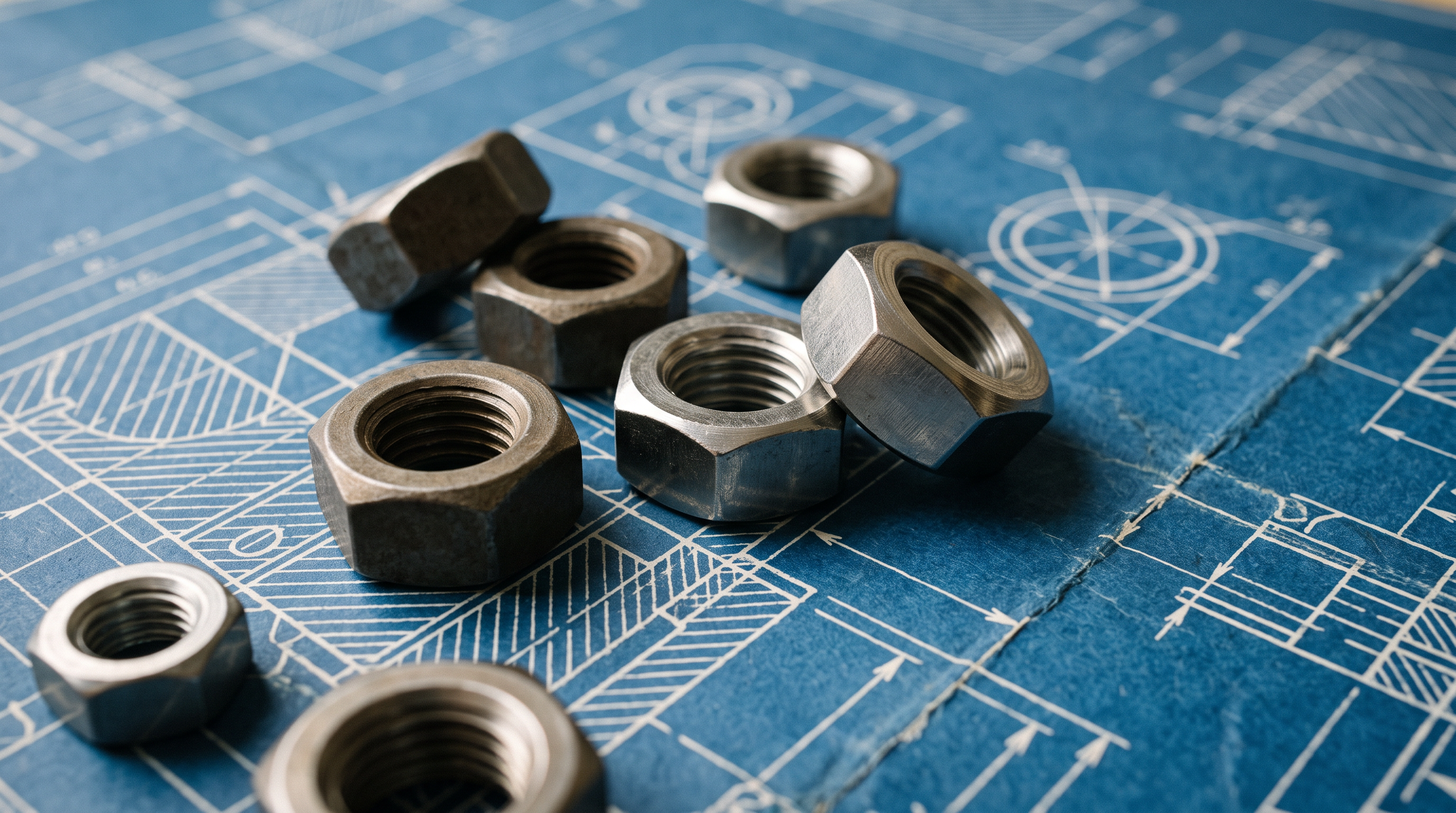
Key Questions in Industrial Hex Nut Specification
Industrial hexagon nuts appear deceptively straightforward, yet mismatching material property classes, dimensional standards, or surface coatings can lead to assembly interference, thread binding, or joint failure. For procurement managers, fastener importers, and engineering teams, clarifying technical boundaries during inquiry avoids costly bottlenecks.
How Do You Approach Industrial Hex Nut Material Grade Selection?
Industrial hex nut material grade selection requires matching the mechanical properties and corrosion requirements of the nut to its mating bolt or threaded component. In mechanical fastening systems, nuts carry proof load expectations corresponding to the assembly. A dimensional standard does not independently define material property class or surface finish, meaning buyers must specify the exact material and grade in their procurement inquiries.
Material families commonly evaluated in inquiries include:
- Carbon Steel: Allows appropriate heat treatment or cold working to meet intended mechanical requirements, including zinc-plated steel variants (such as SWRCH-based components).
Are DIN, ISO, and ASME Hex Nut Dimensions Interchangeable?
A frequent procurement pitfall is assuming international standard designations can be substituted by name alone. As standardisation bodies update specifications, DIN, ISO, GB, and ASME references differ in critical geometric attributes:
The exact standard edition and all relevant dimensions must be verified before any substitution is proposed.
How Does Surface Treatment and Plating Affect Thread Engagement?
Protective finishes protect carbon steels from environmental oxidation, but additive coatings alter physical thread dimensions:
- Electroplated Zinc: Standard electroplating applies a thin protective layer. While metric nuts standardly accommodate typical plating thicknesses, excessive accumulation in internal thread roots can cause binding during assembly.
- Hot-Dip Galvanizing (HDG): Galvanized coatings deposit significantly thicker protective zinc layers. Internal nut threads are typically tapped with special clearance allowances after coating to mate properly with galvanized external threads.
What Are the Engineering Boundaries and RFQ Clarifications?
Reference dimension tables in fastener catalogues provide dimensional guidance to help describe parts, but they do not constitute verified stock declarations or application-specific installation engineering. For lifting, anchoring, or dynamic structural components, engineering teams must supply the intended application, loading direction, and installation conditions for technical review.
When preparing an RFQ or custom fastener inquiry, ensure your specification package includes:
- Exact dimensional standard and revision (e.g., ISO 4032:2023, ISO 4033:2023, DIN 934, ANSI B18.2.2, or GB/T 6170-2015).
- Material specification and property class (e.g., carbon steel, SWRCH variants, or SUS304 / A2-70 stainless steel).
- Surface finish requirements and thread fit tolerances (e.g., zinc-plated steel or plain self-colour).
- Order quantity, packaging needs, and technical drawings for custom or non-standard profiles.
Next Steps
PENLY TH CO., LTD. manufactures a broad range of fastener types across standard catalogue families—including 24 nut product families—and supports drawing-based custom requirements. Buyers can build an inquiry list on the PENLY TH website or contact sales directly via Thailand WhatsApp and LINE accounts.