Procuring threaded rods for construction, plant maintenance, or original equipment manufacturing involves more than simply requesting a nominal diameter and length. Mismatches frequently occur when dimensional standards, material classes, and packaging configurations are loosely defined during the initial inquiry. Structuring detailed threaded rod procurement requirements helps distributors and OEM buyers ensure mechanical compatibility while avoiding damage during international transit and storage.
Base Dimensional Standards vs. Mechanical Performance
Threaded rods (also commonly referenced as all-thread rods, studs, or continuously threaded bars) are produced to various international standard frameworks, including DIN, ISO, ASME, and GB/T. However, a standard designation often specifies dimensional geometry—such as thread pitch, thread profile, and overall length tolerances—without mandating the mechanical property class or final surface finish.
PENLY TH CO., LTD. advises that DIN, ISO, GB, and ASME references are not interchangeable by standard name alone. The exact standard edition and key dimensions must be evaluated before proposing any substitution. Furthermore, a dimensional standard does not automatically determine the base material, property class, or surface coating. For example, dimensional outlines can be produced in various carbon steel strength classes as well as stainless steel grades. Specifying the dimensional standard alone leaves mechanical capacity ambiguous.
Aligning Finishes and Material Grades with Environmental Demands
Threaded rods support diverse applications ranging from structural framing to equipment anchoring. In these settings, atmospheric exposure and assembly design dictate material selection:
- Steel and Strength Classes: Carbon steel threaded rods are specified according to defined property classes, where tensile load capacity and hardness must match engineering calculations. Surface coatings—such as standard electro-galvanizing (zinc plating)—must be factored in to account for thread fit clearances with mating nuts.
- Stainless Steel Options: Stainless steel variants (such as SUS304 / A2-70) provide corrosion resistance in challenging environments. Because stainless steels exhibit different mechanical and thermal properties compared to carbon steels, exact grade confirmation during the inquiry stage prevents assembly mismatches.
On PENLY TH product pages, material and grade are specified within the buyer's enquiry, and dimensions and finishes are reviewed against specific project requirements.
Addressing Packaging and Logistics Constraints
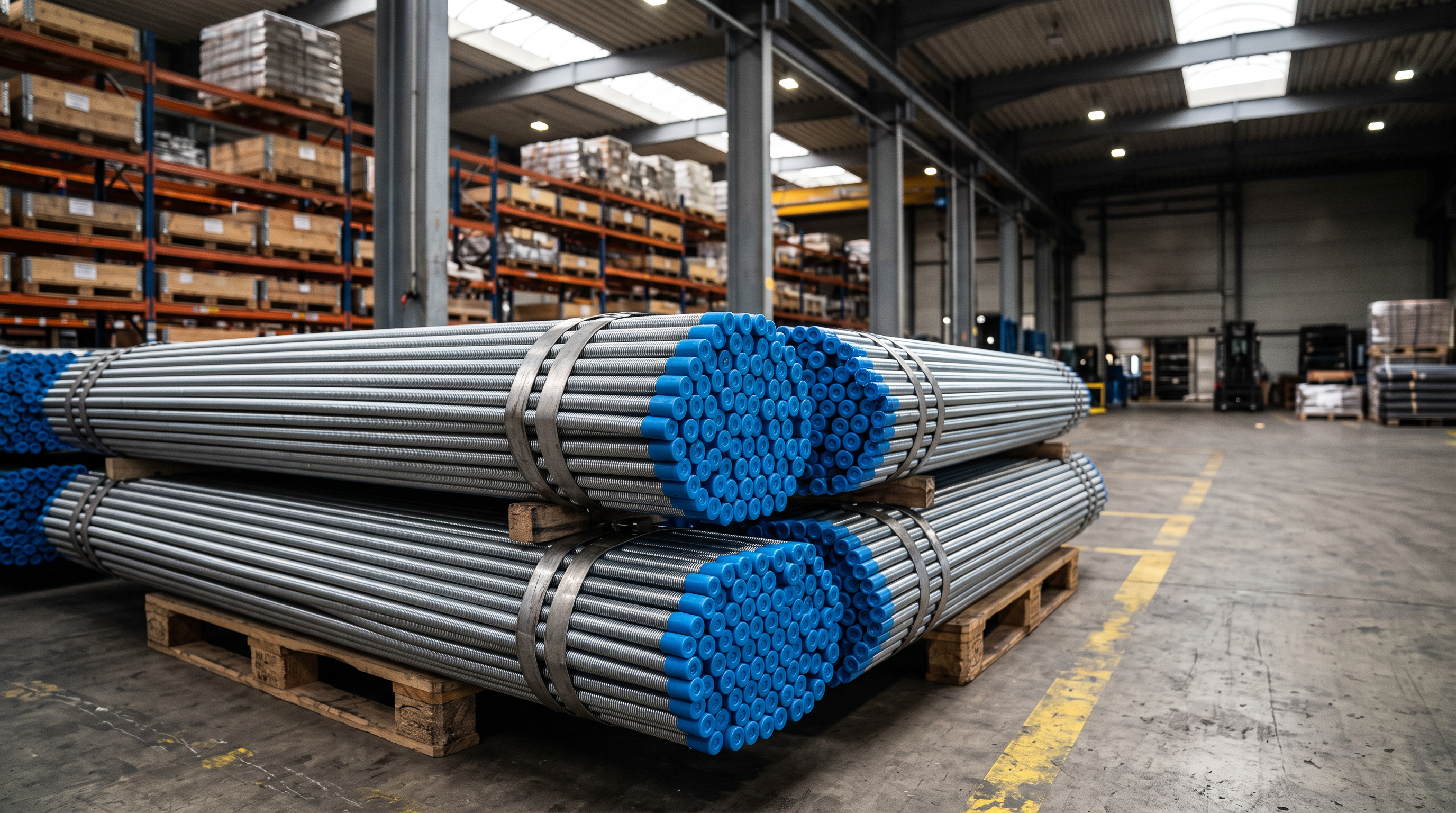
Threaded rods present unique logistical vulnerabilities due to their extended lengths and continuous external threads. Custom packaging requirements should be defined early in the procurement cycle:
- Thread Protection: Continuous threads are susceptible to nicking and thread deformation during transit. Inquiries should clarify whether protective plastic thread sleeves, paper tubing, or end caps are needed.
- Bundling and Strapping: Rods are typically packaged in bundles strapped with metal or polymer banding. Clarifying bundle counts, piece weights, and protective wrapping (such as plastic wrap or rust-inhibiting material) protects inventory during maritime freight and warehouse storage.
- Crating and Palletization: Extended rod lengths often require wooden crates, skids, or specialized palletization to prevent sagging, bending, or handling damage during transport.
- Barcoding and Labelling: Importers and distributors serving downstream assembly lines often require custom bundle tags indicating standard reference, diameter, pitch, grade, and lot traceability.
Suitability, Boundaries, and Custom Enquiry Workflows
This disciplined procurement process suits regional stockists, infrastructure contractors, and industrial equipment builders who require predictable dimensional repeatability and protected arrivals. However, catalog dimension tables serve as reference points to describe needs rather than proof of verified stock or conformity declarations. Final dimensions, material compositions, and packaging configurations require direct confirmation.
PENLY TH supports custom fastener enquiries based on drawings and specific requirements. Buyers can begin with a catalog product family and describe modifications. For custom or non-standard configurations, the buyer provides the technical drawing—including dimensions, tolerances, units, and drawing revision—along with required material, property class, finish, quantity, and packaging details. PENLY TH then reviews feasibility, tooling, samples, and inspection requirements before final specifications, quotations, and delivery arrangements are confirmed.
Evaluation Checklist for Threaded Rod Inquiries
Before submitting an inquiry for threaded rods, review these technical checkpoints:
- Nominal Size and Pitch: Is the thread metric (coarse or fine) or imperial (UNC, UNF), and what is the exact thread pitch?
- Length and Cut Tolerance: What is the total length, and what end-cut chamfer or deburring tolerance is required?
- Base Standard Reference: Have you verified that the specific DIN, ISO, or ASME edition corresponds with your regional assembly hardware?
- Material & Class: Is the exact steel grade or property class clearly identified rather than assumed from the dimensional standard?
- Surface Finish: Does the specified plating thickness preserve pitch diameter clearances for mating nuts?
- Packaging Specification: Are bundling quantities, outer wrapping materials, thread-protection caps, and labeling criteria documented in the RFQ?
Submitting Your Threaded Rod Inquiries
Buyers can build an inquiry list on the PENLY TH website for both standard parts and custom manufacturing requirements. To review specifications or discuss non-standard lengths, materials, and packaging setups, contact the PENLY TH sales team via their Thailand WhatsApp or LINE accounts.